The Aftermath of FIFA World Cup Infrastructure Development & Maintenance for “Developing” countries
Below are the World Cup Hosts from 2022 back to 1982:
- 2022 Qatar 🇶🇦
- 2018 Russia 🇷🇺
- 2014 Brazil 🇧🇷
- 2010 South Africa 🇿🇦
- 2006 Germany 🇩🇪
- 2002 South Korea 🇰🇷
- 1998 France 🇫🇷
- 1994 USA 🇺🇸
- 1990 Italy 🇮🇹
- 1986 Mexico 🇲🇽
- 1982 Spain 🇪🇸
In the last 30 years, with the 11 FIFA World Cup Tournaments hosted, only 3 have been hosted by the “Developing” countries. 2 from the Americas and 1 from Africa.
Let’s take a look at the infrastructure development and condition for the Developing Countries, post World Cup:
Mexico – 1986 🇲🇽
1986 was a year of slow growth and moderate inflation.
An article was published by the Los Angeles Times on 30 June 1986. It mentions that after the honeymoon phase of the World Cup, Mexico went to focus back on soaring prices and foreign debt.
https://www.latimes.com/archives/la-xpm-1986-06-30-fi-190-story.html
The article goes deep into explaining how the development boosted the economy for the short term but also aided in plunging the country into more economic woes in the long run. Part of the article speaks on how a Railway Passenger service that had been kept at 1 Peso for over 20 years, was expected to rise to 50 Pesos.
For the average tourist, this is very affordable, but for the average Mexican citizen in the country, it brought or even added a whole new dynamic of financial hardships.
Observation: The FIFA World Cup did change Mexico’s fate for the better in the short-run, but it only made the economic situation slightly worse later on.
South Africa – 2010 🇿🇦
It took 24 years for another developing country to host the World Cup, and this time it was Africa’s turn. It was the first time that the event was hosted in Africa, in the sporting event’s 80 years of existence.
2010 was 2 years after the Global Financial Crisis had occurred and quite a lot of countries were recovering. Developing countries were facing scarce financing – according to a WorldBank report.
An article was published on the aftermath of the FIFA World Cup for South Africa, citing the inability to maintain the world class stadiums that had been built. Essentially, the country wasn’t prepared to maintain such expensive stadiums as the local premier league (PSL) and the other tournaments do not pull crowds that are enough to maintain the use of the stadiums or be willing to be stadium tenants.
https://www.si.com/soccer/2020/05/04/2010-world-cup-south-africa-legacy-fifa
Observation: Tourism grew for South Africa, but it came at a cost of genuinely maintaining and running the structures which became a burden, till this day.
Brazil – 2014 🇧🇷
Major Economic events for 2014 included falling oil prices, Ebola outbreak and rising stock markets –
https://www.financialsymmetry.com/top-10-economic-stories-2014/
Many Articles list the infrastructure challenges that are similar to what South Africa Faced after hosting the World Cup. These stadiums were simply to expensive to operate and maintain.
https://www.businessinsider.com/brazil-world-cup-stadiums-one-year-later-2015-5
Observation: Similar comment to South Africa, tourism grew for South Africa, but it came at a cost of genuinely maintaining and running the structures which became a burden, till this day.
Stadium Operational Costs 🏟
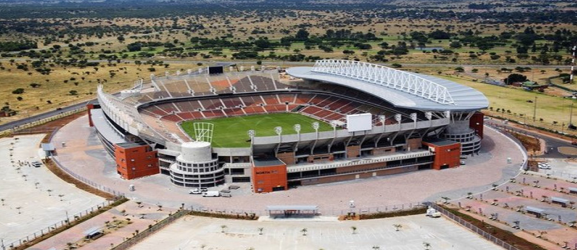
A report by the South African newspaper, Mail and Guardian, gave a glimpse of the cost of running the Peter Mokaba Stadium, located in the city of Polokwane:
“The stadium, which has a maintenance budget of R23-million this year — with the city providing R17-million of the amount — needs two events a month drawing crowds of more than 15 000, to be financially sustainable, according to its presentation to Parliament’s sports portfolio committee.” – https://mg.co.za/article/2011-06-10-stadiums-score-costly-own-goals
In USD terms, the maintenance budget costs $1,2-million, with the City providing $900k. That’s 75% of the total budget and on top of that, funds need to be allocated from the Government or raised through fundraising schemes (raising the costs of city rates and taxes). Two events a month, which translates to 24 events per year, which attract crowds of more than 15,000 to remain operationally sustainable. The stadium has a 45,000 seating capacity so 1/3 will be utilised to keep it breaking-even. This also speaks underutilisation of resources.
Analysis: Whilst it doesn’t give us a full picture of how the stadiums have been performing, it gives us a glimpse of the challenges faced with maintenance of the stadiums, post the major soccer event.
Turning Point by FIFA and other Governing Bodies? 💡
Below is a list of the hosts for the next FIFA World Cup tournaments:
- 2026 – USA 🇺🇸 , Mexico 🇲🇽 and Canada 🇨🇦
- 2030 – Uruguay 🇺🇾 , Argentina 🇦🇷 and Paraguay 🇵🇾 (honorary hosts) then Spain 🇪🇸 , Morocco 🇲🇦 and Portugal 🇵🇹
- 2034 – Saudi Arabia 🇸🇦
With the exception of Saudi Arabia, the next 2 world cups will have joint hosts. The countries mentioned in the 2026 WC have 2 developed and 1 developing country. For the 2030 WC, apart from the honorary hosts, we have 2 developed and 1 developing country as well.
As a developing nation, shouldering the entire burden of hosting a World Cup has more dire consequences on the economy, given infrastructure built may not need to be used after, or has very little economical benefit to the economy.
By co-hosting, the most direct benefits that arise are:
- Less funding spent overall as:
- It reduces the need to build new stadiums since;
- There will be renovation costs incurred for current stadiums to suite the standard required.
- Boosting the tourism sector – as expected, and
- Reduced risk of increasing financial burden on the citizens and economy, post World Cup events.
The co-hosting model, if proved to be successful in 2030, could mark a new blueprint for developing nations to gain a chance & the rewards of hosting the World Cup, whilst reducing the risk of the financial outlay required to prepare for the event.
Tapiwa Chiri is a Chartered Accountant and writes these articles in his personal capacity.
 The Analyst’s Arena
Leave a comment